Kissing the Gunner’s Daughter
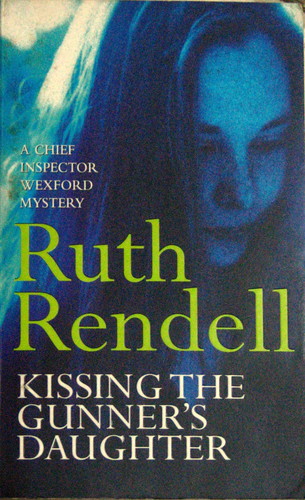
Another Ruth Rendell beach read from last week, and it was a very good one. This sees Inspector Wexford on his home ground in Kingsmarkham, where Sergeant Caleb Martin is shot dead during a bank robbery. Then, six months later, a ghastly tragedy unfolds — at isolated Tancred House, home of novelist Davina Flory, five bullets murder Flory, her husband, and her daughter, spilling blood everywhere. Only Daisy, Davina’s 17-year-old grand-daughter, survives injured, but her memories of the massacre are far from clear. Wexford is convinced that the two cases are linked, but how could they possibly be? And as he tries to get to the bottom of the Tancred House massacre, he finds himself also trying to cope with estrangement from his beloved daughter, Sheila; he disapproves of her engagement to pompous novelist Augustine Casey and this angers her.
There are a large number of characters and Rendell, as usual, throws us a few red herrings, though it must be admitted that after a point, these are weak and transparent. This wasn’t, in all honesty, a difficult murderer to guess; I had part of the solution figured out fairly soon. But it is, in terms of psychologically believable character behaviour, a very fine book. Rendell sets up a world in which a particular sort of morality prevails, motivating her characters to act the way they do. This is verging on a sort of social commentary, though to say that would be to agree that Rendell’s dark vision is our reality; I’m not convinced it is, though it is a plausible organic whole. Particularly fascinating is the insight into Wexford’s own family relationships, as we are reminded that even policemen, who must objectively enforce the law, are not free of their own particular quirks and biases.
Kissing the Gunner’s Daughter‘s prose creates an appropriately brooding, creepy atmosphere around Tancred House, mostly because of Rendell’s descriptions of the thick woods that form part of the estate. The woods and their trees are with us right through the book, mute witnesses to much of importance in this tale, their shadows perhaps inspiring much of it. Rendell is, in some sense, indicting the society she’s created, and it’s not pleasant to watch as it reveals itself deserving of that indictment. Reading this, I was terribly, terribly chilled.