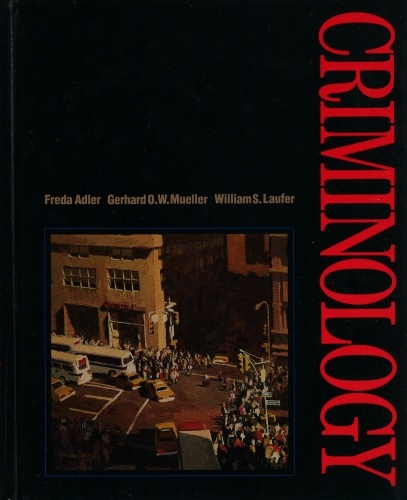
suuremas formaadis raamat
Criminology is a young discipline. The term "criminology" is barely a century old, but in those one hundred years criminology has emerged as a major social and behavioral science. Criminology's contributions are essential for dealing with a crime problem in our society that many people consider to be intolerable. Problems as vital and urgent as those addressed in this book, "Criminology", are challenging and exciting.
We invite the teacher and the student to trace the patch which criminologists have traveled, and to join in mapping out the future of criminology in the twenty-first century - which is less than a decade away.
This book has a four parts. Part I presents an overview of criminology, pointing to the vast horizon of this science. It explains techniques for measuring the characteristics of criminals, crime, and victims. It also traces the history of criminological throught the era that witnessed the formation of the major schools of criminology: classicism and positivism (eighteenth and nineteenth centuries).
Part II explains criminal behavior on the basis of the various theories that were developed in the twentieth century. Among the subjects covered the theories that offer biological, psychological, sociological, sociopolitical, and integrated explanations.
Part III takes and innovative approach by explaining the types of crimes not only from a legal-historical perspective but also on the basis of the contemporary theories of rational choice and routine activities. The approach permits an assessment of the motivations and activities of offenders, as well as the prevalence and distribution of crime. The familiar street crimes, such an assault and robbery, are assessed, and so are criminal activities that have been highlighted by researchers only in recent years.
"A Criminological Approach to the Criminal Justice System" (Part IV) emphasizes contemporary criminological research to the functioning and interaction of the various components of the system. It also explains the decisionmaking processes of all the participants.