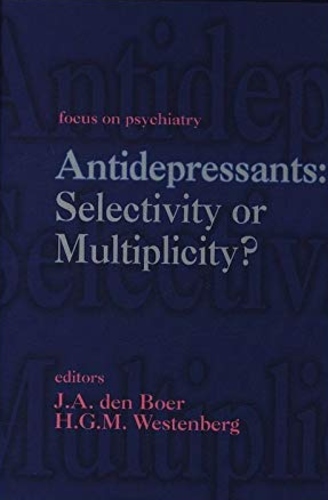
Antidepressants: Selectivity or Multiplicity?
Despite the developments in antidepressant therapy, many patients still fail to respond to first-line antidepressant treatment. In addition, clinicians often face the problem of non-compliance due to side effects. The advent of selective serotonin reuptake inhibitors (SSRIs) in the 1980s ushered in a new era of antidepressant treatment. Due to improved safety and side-effect profiles, these selective drugs have replaced the older multiple-acting tricyclic antidepressants as first-line treatment for depression. However, there remains a number of unmet needs: SSRIs have a delayed on set of actions, they are no more efficacious than the older antidepressants and persistent side effects, like sexual dysfunction and sleep disturbances, may present a potential barrier to compliance during long-term treatment.
Since the 1990s we have seen the introduction of a new class of antidepressants with combined serotonin/noradrenalin reuptake properties, the so-called dual-acting antidepressants. These drugs supposedly have greater efficacy and a faster onset of action than SSRIs but the tolerability profile in not necessarily better. Other pharmacological properties may help to circumvent these side effects but can also produce new ones, raising the question of whether multiplicity is better than selectivity.
This volume, written by authoritative international scientists and clinicians, provides a wealth of data that my help clinicians to make an up-to-date decisions in the management of depression. It also provides those who are carrying out research in this field with an extensive reference source on the preclinical, clinical, pharmacological and pharmaco-epidemiological aspects of the new generation antidepressants.